Trader Secrets

Field-tested wisdom

Two decades of practical knowledge from the safari field — care, craft, and the occasional caution.

No. 01

Trader Rifle Strap — Attaching the Swivel
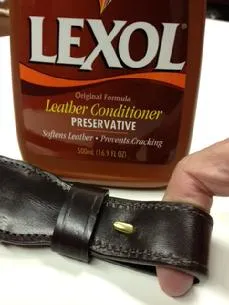
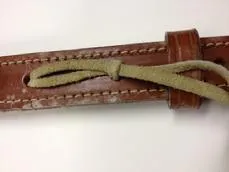
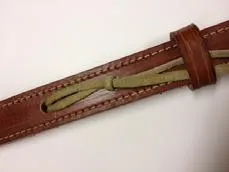
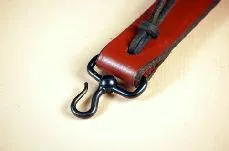
Trader Rifle Strap with swivel and keeper detail

The easiest way to attach a swivel to the strap is to lubricate the leather with LEXOL, which can be found in any shoe repair shop or auto supply store. Slide the keeper down over the bridle hook. Using the index finger, open up the slot for the swivel and force the leather over the bridle hook. Place the swivel on the strap and reverse order.


No. 02

Mold on Leather

Verdigris on a leather cartridge loop
Vinegar applied to the affected leather
Cleaned leather, verdigris removed

For those living in humid climates, mold on leather products can be a pain. One common problem is verdigris (pesky green stuff), which will develop on your cartridges and possibly stick in your rifle's chamber…a bad thing. Removal is like magic using plain old vinegar.


No. 03

Parker-Hale Takedown Rods

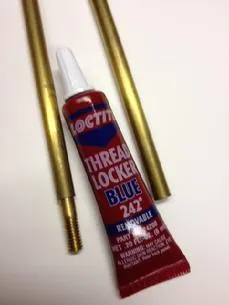
Parker-Hale brass rod sections with Loctite

If you choose to use your takedown rod only in your gunroom, think about using green or blue LOCTITE on the threads so they will not constantly be undone. If you choose to use again as a 3-piece, simply heat the joints and unscrew.


No. 04

Secure Skinner

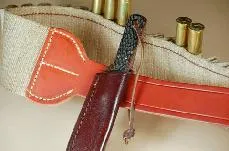
Skinning knife with lanyard secured around a belt tang

If you carry a skinning knife it's best to have one with a lanyard hole in the handle. The lanyard can then be slipped around the belt tang to prevent it from falling out (it does happen!). Chances of having to use your skinner for rapid deployment is nil, however dressing a kill with a pocket knife is tricky.


No. 05

Cleaning Rod Guide

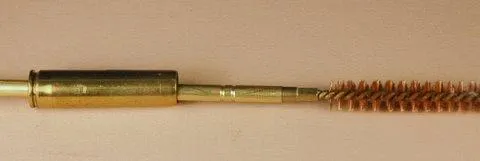
Cleaning rod with cartridge guide and brush
Cleaning rod cartridge and brush
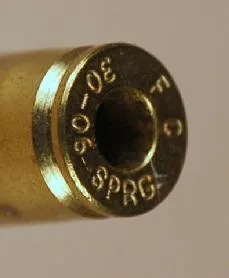
Cartridge with drilled primer pocket
Drilled primer pocket
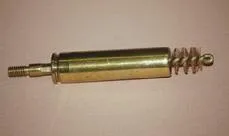
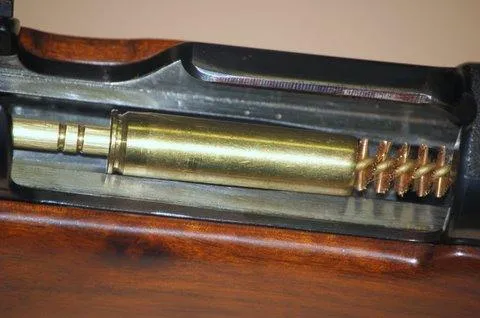
Brush stored inside a modified cartridge
Cartridge as holder for brush

Cleaning a rifle properly requires the use of a guide or support for the rod to ensure no damage will occur to the throat or chamber. A very simple guide can be made from a spent cartridge by drilling a hole slightly larger than the rod diameter in the primer pocket. Greater stability can be achieved by filling the cartridge with a wood or plastic dowel before drilling. A necked cartridge will have to be cut back to insert the dowel. This will not allow you to use the cartridge guide as a very convenient holder for the brush when not in use.


No. 06

A word of caution: hook swivels

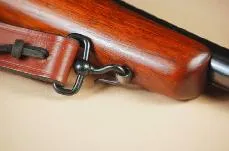
A quick-detachable hook swivel attached to a rifle stud

Those neat-looking quick-detachable hook swivels (so hard to find these days) were intended to be used on studs attached to the buttstock and wood fore-end…not on a barrel-mounted stud. No matter how careful you are, the hook swivel will scratch the barrel(s). Think about your investment. Winchester made hooks for their Model 54s and others having large-eyed studs on the butt and fore-end. Some of the Winchester hooks had extra-long shanks.


No. 07

Vintage Sling Studs

Vintage sling stud with brass insert
Drilled brass insert ready for the new swivel

Even with those large vintage swivel eyes, you can adapt to the "Uncle Mike's" quick-release swivel or similar. The solution is simple and will not alter the value of your firearm. Most of the large-eyed studs we are speaking of have a hole 3/16″ diameter. Ask your gunsmith to insert a soft brass 3/16″ rod, slightly longer than the eye width, into the hole. Peen both sides to fill the entire hole. Next, drill a 9/64″ hole centered in the eye to accept the quick-detachable swivel. You can return the firearm to its original condition by simply drilling out the brass insert.


No. 08

Large Sling Eyes

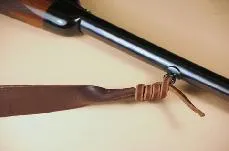
Thong strap threaded through a large sling eye
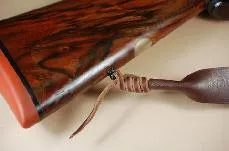
Three-turn clinch knot detail

The large sling eyes found on most vintage rifles were intended to be fitted with a "Thong Strap" (sling) rather than the hook swivel mentioned above. The thong is inserted through the eyes and secured with a "three-turn clinch knot" as seen below. Prepare the thong by lubricating it with a leather balm such as Lexol, making it flexible enough to pull the knot tightly against the strap. When dry, this knot will not slip. One then has the most silent of all attachments.


No. 09

Broadhead Survival Tool

Two-blade broadhead
Broadhead lashed to a wooden shaft
Completed survival spear with bound broadhead

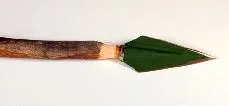
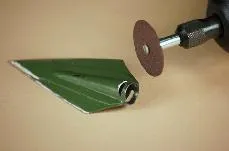
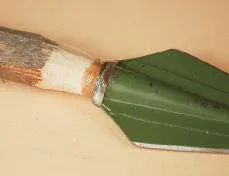
Although a human can survive many days with only water and some vegetation, eventually animal protein is necessary to sustain strength. Weapons for capturing small game and fish are commonly the snare, arrow deadfall, or knife. Add a two-blade broadhead to your survival kit and you'll be a happy camper. It takes up little space and may be used as a knife, spear, or arrow. Whittle the end of a three- or four-foot shaft to fit the broadhead and you have a very effective spear, or similarly an arrow. If you truly want to be prepared, Trader Keith recommends cutting a slot in the broadhead shaft tube using a Dremel tool. The slot allows some wood to be cut from the shaft. Secure the broadhead using dental floss, wire, twine, etc. Pine pitch or resin can seal the binding.

More from the workshop

Questions about your kit?

Contact us